Here’s What Will Happen to Prince George, Prince Louis and Princess Charlotte’s Titles When William Becomes King
Queen Elizabeth II lived to the age of 96, and Prince Philip lived to 99, so it’s likely that 77-year-old King Charles III will be king for a good, long while. Still, Charles’s reign did not begin until he was 74, making him the longest-waiting heir and the oldest heir to become monarch, so his reign will not be a long one.
Charles’s son, Prince William, will eventually ascend the throne, and that one tiny shift is of great importance: It will cause a dramatic cascading effect when it comes to his kids’ titles, and beyond. “When a new monarch succeeds to the throne, the other members of the royal family move up in the line of succession,” says royal historian Carolyn Harris, PhD, author of Raising Royalty: 1,000 Years of Royal Parenting. But the royals’ new titles might not be as straightforward as you think. Plus, there might be a few historic firsts in store for Prince George, Princess Charlotte and Prince Louis.
Read on to find out how William’s shift in status will affect his children, along with the ripple effect it could have on the rest of the monarchy.
Get Reader’s Digest’s Read Up newsletter for more royals, humor, cleaning, travel, tech and fun facts all week long.
What will the order of succession be after William takes the throne?
Once William becomes king, the order of succession will largely remain the same—everyone will simply move up a spot. For example, Prince George, who is currently second in line, will become first in line, taking his father’s current title as Prince of Wales, which he acquired in 2022 after the queen died and Charles became king.
Succession always follows the monarch’s direct line, until there are no more direct descendants. At that point, it goes back up to the monarch’s younger sibling and his or her children. Therefore, William’s younger brother, Prince Harry, is in line behind George, Charlotte and Louis.
What’s more, Charlotte is the first female to be ahead of a younger brother in the line of succession. Charlotte, who would have previously been passed over for Louis, gets to keep her position in line thanks to the Succession to the Crown Act of 2013, enacted during Queen Elizabeth II’s reign. The law ended male primogeniture, or the tradition of the crown passing to the oldest male, for those born after 2011. Now, elder daughters are not left out and can inherit the crown as well.
Here’s the order of succession under a hypothetical King William:
- George, the Prince of Wales
- Princess Charlotte of Wales
- Prince Louis of Wales
- Prince Harry, Duke of Sussex
- Prince Archie of Sussex
- Princess Lilibet of Sussex
- Andrew Mountbatten-Windsor (yep, he’s still in the lineup, despite being stripped of his title)
- Princess Beatrice, Mrs. Edoardo Mapelli Mozzi
- Miss Sienna Mapelli Mozzi
- Miss Athena Mapelli Mozzi
- Princess Eugenie, Mrs. Jack Brooksbank
- Master August Brooksbank
- Master Ernest Brooksbank
- Miss Adelaide Elizabeth Annina Brooksbank (born Aug. 3, 2026)
- Prince Edward, Duke of Edinburgh
- James Mountbatten-Windsor, Earl of Wessex
- Lady Louise Mountbatten-Windsor
- Anne, The Princess Royal
Why are the older, most established royals so far down on the list?

As noted above, succession follows the direct descendants of each royal before passing to the royal’s younger sibling. That means each new royal child born bumps those in line after them back further, as evidenced by Princess Eugenie’s new royal baby, Adelaide, jumping in line ahead of Eugenie’s uncle, Prince Edward. Prince William’s children are likewise ahead of his younger brother, Prince Harry, who will keep getting pushed back as the Wales kids have their own children.
“There are numerous examples of members of the monarch’s family who were born close to the top of the line of succession who gradually dropped to a lower place in line as the royal extended family expanded over time,” Harris says. “For example, Queen Elizabeth II’s eldest cousin, George Lascelles, Earl of Harewood (1923–2011), was born sixth in line to the throne but was 46th in line to the throne at the time of his death.”
Princess Anne, the second child of Queen Elizabeth II, was born before the Succession to the Crown Act went into effect, so she remains far down on the list, behind younger brothers Andrew and Edward and their children.
How do royal titles work, exactly?
Royal titles are both inherited and bestowed according to tradition. “According to letters patent issued by King George V in 1917, children and male-line grandchildren of the monarch hold the title of HRH Prince or Princess from birth,” Harris says. “It’s possible that in future reigns, these titles will be restricted to the children of the monarch and heir to the throne.” This would be in keeping with the recent paring down and streamlining of the monarchy.
Dukedoms
In addition, princes and princesses can hold multiple titles such as duke, duchess or earl, which makes titles very confusing. Generally, the higher up the ranks you are, the more titles you end up with, and there is no official limit.
For example, Prince William holds three dukedoms: On William’s wedding day (a traditional title-giving day), Queen Elizabeth named him Duke of Cambridge, as well as Earl of Strathearn and Baron Carrickfergus. Then William inherited the titles of Duke of Cornwall and Duke of Rothesay when his father became king.
“The tradition of all the sons of the monarch receiving ducal titles dates from the reign of King Edward III (1327–1377), who had five sons who survived to adulthood,” Harris says. “Edward III made his eldest son and heir Prince Edward, Duke of Cornwall, so that he would have his own independent income. Younger sons received their own dukedoms (Clarence, Lancaster, York and Gloucester); the descendants of the Dukes of Lancaster and York would fight one another for the throne in the Wars of the Roses (1455–1487).”
Today, the title of Duke of Lancaster belongs to the monarch (whether male or female), and the title of Duke of York is traditionally given to the monarch’s second son. Prince Harry could not become Duke of York when he married Meghan in 2018, however, because the title was already held by his uncle, Andrew. Queen Elizabeth chose from available dukedoms for Harry, landing on Sussex, which was held only once before, by Prince Augustus Frederick in 1801. Meghan, however, is the first Duchess of Sussex because neither of Augustus’s marriages were approved by the crown. Augustus was considered progressive and somewhat of a rebel, like Harry, but the queen could not have known that Harry would become estranged from his father, as Augustus did because of his liberal views.
Patronages
In addition to royal titles, William may also bestow some patronages. When there is a change in reign, there are often changes to royal patronages, as the late monarch’s patronages are redistributed to other members of the royal family.
“How this redistribution of patronages unfolds depends on the interests of individual members of the royal family and the overall approach to philanthropy in the new reign,” Harris says. “While Queen Elizabeth II and Charles III supported a broad range of different philanthropic organizations, William is focused on a smaller range of targeted issues, including the environment and alleviating homelessness.”
How will George’s title change when William becomes king?
As the next heir apparent, Prince George will have the most changes to his titles. “The heir to the throne automatically becomes Duke of Cornwall and enjoys access to the revenues from the Duchy of Cornwall, and will receive the title of Prince of Wales from the monarch,” Harris says. The dukedom will provide George with an income and increase his wealth, as it did for William.
“William will decide when George becomes Prince of Wales, and William and George together will decide if a formal investiture as Prince of Wales will take place,” Harris says. For example, Charles was given the title Prince of Wales by Queen Elizabeth when he was 9 years old, six years after she became queen, but he did not have a formal ceremony (investiture) until he was 20.
The Prince of Wales title, while not guaranteed because it is given, not inherited, is almost a certainty because it is the usual title of the first male in line to the throne. Why? In 1301, after he had conquered Wales, King Edward I gave the title to his eldest son, Prince Edward; eventually, it became tradition. Upon taking the throne, Charles gave his former title Prince of Wales to William, who will almost certainly give it to George.
How will Charlotte’s title change?

Princess Charlotte’s title may change, but not right away. “The eldest daughter of the monarch traditionally holds the title of Princess Royal,” Harris says. This title is not automatic; it is bestowed by the monarch. However, it is given for life, so Charlotte can’t have the title right away because there already is one: Princess Anne, Charles’s sister.
(Note that the future Queen Elizabeth II couldn’t be named Princess Royal because the title was already occupied by her aunt, Princess Mary, until well after Elizabeth became queen. And the queen’s sister, Princess Margaret, was never Princess Royal because she was the second-born daughter.)
“Only one Princess Royal exists at any one time, so Princess Charlotte will not receive this title until after the death of Princess Anne,” Harris says. At that point, the current monarch, who will probably be King Charles or the future King William, will likely give the title Princess Royal to Charlotte.
Another title reportedly intended for Charlotte (and potentially her future husband) is Duchess of Edinburgh, a title given to then–Princess Elizabeth upon her marriage to Prince Philip, who was styled as the Duke of Edinburgh. However, both titles are currently held by Prince Edward, Queen Elizabeth’s youngest son, and his wife, Sophie.
And, as mentioned earlier, Charlotte will not lose her place in line to the throne, since either sons or daughters can now inherit the crown.
How will Louis’s title change?
Prince Louis’s title will remain the same, as will his place in line. He might get additional titles when William is king, but only after he’s an adult. “Prince Louis will likely receive a ducal title when he marries, as was the case for both Prince William and Prince Harry,” Harris says. However, any dukedom Louis receives is purely decorative and would not generate income. (The only profitable duchies today are Cornwall and Lancaster.)
Traditionally, the monarch gives the second son the title Duke of York, which is available now that Prince Andrew has had it taken away due to his criminal associations. The question is, however, whether it will still be too soon to use that title again due to its now-negative connotations.
Instead, Louis could be given a historic duchy title that has not been held for a long time, such as Clarence (although that one is said to be cursed) or Cambridge (which will revert to the crown when William becomes king). It’s also possible that by the time Louis is ready, the royal scandal with the last Duke of York might have faded, and Louis will hold the title after all, as per tradition.
When Prince George eventually becomes king, how will things change again?
This will likely be way in the future, but there are some things we know. “When George, Charlotte and Louis have children of their own, these children will take precedence over Prince Harry and his children in the line of succession,” Harris says. “Prince George’s eldest child, male or female, will become heir to the throne when George succeeds to the throne.”
If future King George’s eldest child is a daughter, regardless of whether he also has sons, she will make history as the first female heir apparent after the 2013 Succession to the Crown Act was passed. However, the act doesn’t apply to other inherited or traditionally gifted titles (yet), and it’s not clear exactly how getting rid of male primogeniture will affect them.
“If Prince George’s first child is a daughter, she may become the first princess to succeed to the Duchy of Cornwall as heir to the throne, which was previously reserved for male heirs to the throne,” Harris says. “The future Queen Elizabeth II did not have access to the revenues from the Duchy of Cornwall.”
In addition, if King George’s heir is a daughter, will she be given the title of Princess of Wales in place of Prince of Wales (provided the current Princess of Wales, Catherine, has vacated the title by becoming queen)? It’s possible. Chances are, new rules will be passed by then that will clarify these questions.
Only time will tell!
Sources:
- Carolyn Harris, PhD, royal historian and author of Raising Royalty: 1,000 Years of Royal Parenting; email interview, August 2026
- College of Arms: “Styles and Titles of the Royal Family”
- BBC: “Royal Family Tree: King Charles III’s closest family and line of succession”
- Debretts: “The Princes of Wales”
- Debretts: “Ranks and Privileges of the Peerage”
- Debretts: “The Princesses Royal”
- Debretts: “Discover the Royal Family”
- Royal.uk
- The Guardian: “Who owns and profits from the duchies of Lancaster and Cornwall?”


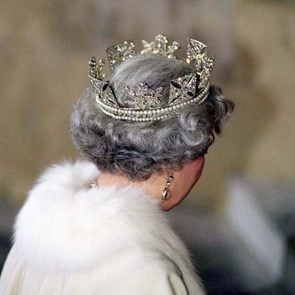
The post Here’s What Will Happen to Prince George, Prince Louis and Princess Charlotte’s Titles When William Becomes King appeared first on Reader's Digest.
from Reader's Digest https://ift.tt/XE6JUlj
Comments
Post a Comment