I am cheap and have an unusually high tolerance for being squished against strangers, so I rarely spring for a seat assignment when I fly. But when I do get to choose, it’s window, every time, no debate. I like to lean my head against the wall, pull my hood over my face and pretend I’m a burrito being gently rocked to sleep (in a cradle that smells like gasoline and feet). It’s very comforting.
My husband, on the other hand, prefers the aisle, because he has a serious medical condition called “ants in his pants” and cannot go an hour without getting up to “stretch his legs.” (Translation: wander the galley making small talk with strangers.)
We’ve been married a long time and have never once resolved this. Turns out, we may not need to! According to flight attendants, we were basically doomed to pick these seats from the start. And, apparently, we’re not even the weird ones—it’s shockingly common for couples to sit slightly apart, on purpose, for reasons we’ll get into later.
Your seat choice really can say a lot about you, so I called up a couple of flight attendant friends to ask what they’ve noticed about passengers and their seating habits over the years. Let me tell you, they did not disappoint. It turns out where you plant yourself on a plane is a surprisingly reliable window (sorry) into who you are, how you cope with stress and even how your marriage operates at 500 miles an hour.
So what does your go-to seat actually reveal? Buckle up and read on.
Get Reader’s Digest’s Read Up newsletter for more travel, cleaning, humor, tech and fun facts all week long.
Is a person’s seat choice really that revealing?
According to the folks I talked to, things like how you speak and your footwear reveal more about your personality, but seat choice can tell you something real—with one important caveat: Many of us aren’t picking our seats. On a packed flight or last-minute booking, people end up wherever there’s an open seat, not necessarily where they’d choose. But when passengers do have options, patterns emerge fast, and flight attendants notice them because they watch thousands of strangers make this exact decision, week after week.
Sydney A., a flight attendant who has worked for more than 20 years for all four major U.S. carriers, says the patterns are consistent enough that she can often guess, just from a quick scan of who’s boarding, roughly where someone is headed to sit. “I don’t know how to explain it, but like, personality-wise, I know who’s going to be sitting where,” she told me. She’s also noticed that business travelers gravitate toward one particular spot (more on that below), and that entire families tend to cluster in one general area, seemingly by instinct rather than any airline policy.
Loretta H., a flight attendant for Jet Blue, points out that money plays a role too. Passengers who pay extra for upgraded seats also tend to be the ones who spend more once they’re airborne. “It appears that people who sit in more expensive seats spend money freely and buy things off of the cart when I come through,” she says. “People in the back usually don’t buy food or extras.” It’s a good reminder that seat choice isn’t purely psychological—it’s also practical.
It’s not just flight attendants who have opinions here, either. When Reader’s Digest polled our Instagram followers on aisle-versus-window, the comments section turned into exactly the kind of good-natured argument you’d expect—and the reasoning people gave lined up almost perfectly with what the flight attendants told me. Of course, all this insider knowledge isn’t just cocktail-party trivia for cabin crew. It actually helps them do their jobs better, which we’ll get into a little further down. But first, the fun part.
What does your seat choice reveal about you?

Whether you’re an aisle person, a window person or someone who’s resigned themselves to the middle, your preferred perch says something about your priorities, your stress levels or, in some cases, just your inseam. Here’s what flight attendants have picked up on.
The aisle seat
Aisle-sitters tend to be people who value efficiency and access over coziness. Sydney says this crowd skews heavily toward business travelers who want to work uninterrupted. “Businessmen and -women I’ve noticed usually sit in the aisle because it’s easier to have their laptop out and get up and do things if they need to,” she says. It also helps them get to meetings and connections more quickly, as they can get off the plane faster.
Choosing the aisle may also mean that you don’t like to inconvenience others … and may be a bit of a control freak. Sydney counts herself in that camp: “I want to be able to get up when I need to and not have to ask the people next to me to keep moving.”
Our Instagram followers added that they choose the aisle for the same reason my husband does: mobility. “Aisle, every time. We can get up and walk every now and then,” wrote one commenter. Another put it more bluntly: “Aisle … and I board last so I don’t get bumped by all the passengers.” One follower summed up the whole control angle in a single line: “I want to be able to stand up without waking up or saying excuse me to anyone.”
The window seat
If you’re a window person, congratulations: You’re probably either a napper, a flying enthusiast or both. “For people who like to sleep, they do like window seats,” Sydney says, since there’s a wall to lean on and no one climbing over you mid-doze. And if you wake up? That window is right there with a gorgeous view of the planet spread out beneath you.
Window seats are also good for people with health anxiety, as they keep you farther from high-traffic aisles, which is part of why germaphobes and anxious flyers often request them too.
There is also a different aspect of control here. “Window, so I can control the shade … I want to look out at the landscape as we fly over,” one commenter told us. And it’s true, window sitters get to decide how light or dark it is for everyone around them. This appeals to people who like to feel like they’re steering their own experience, even when someone else is flying the plane.
The window loyalists in our Instagram comments made their case just as passionately as the aisle crowd did. “Window! Built-in headrest for naps!” one commenter wrote. A few frequent flyers admitted their preference shifts with the length of the trip: “Short flights: window. Long haul flights: aisle,” as one follower put it—proof that even die-hard window people might defect for a long-haul flight.
The middle seat
Nobody dreams of the middle seat, and flight attendants confirm it: This is usually the seat of last resort rather than a personality statement. But how a middle seat gets filled can say plenty about the people around it. Sydney has noticed one particularly sweet pattern with couples: “The male will offer his wife the aisle or window seat, to be nice,” she says. “I see that a lot.” She adds that younger couples almost always book seats together, even knowing that one of them must sit in the middle.
Less charming is what happens with some older couples, who book the aisle and window seats in the same row and let a total stranger get sandwiched in the middle. “It makes the person in the middle super uncomfortable,” Sydney says. “It’s awkward.” If you’ve ever wondered why you landed in the middle seat between two people who clearly know each other but haven’t said a word to you, well, now you know. They’ve probably been married for 30 years and just need a little space, OK? In my husband’s and my defense, we never try to make anyone else feel awkward. The dream is that we end up with an empty middle seat so we can have extra space.
However, if you are the person who intentionally chooses the middle seat, you may be a sociopath. Just kidding! But you may be very conflict avoidant—say, letting someone sit in your window seat while you choose the middle seat to avoid a fight—or you may just love talking with strangers, and the aisle seat gives you two opportunities to chat someone up.
The exit row or extra-legroom seat
This one’s less about personality and more about anatomy and budget. “Tall people are the people I see the most that care about where they’re sitting,” Sydney says, and they’ll often pay for the extra room regardless of whether it’s an exit row or another upgraded legroom option. Loretta agrees that height plays a bigger role than any deep psychological need for control: She’s seen tall people (as well as people who just have a few extra bucks) pay for JetBlue’s Even More Space seats.
As for who tends to sit in the actual exit row specifically, Loretta says there’s no strong pattern beyond that: It’s largely just people who want the legroom and are willing to pay for it. Exit row seats have their own trade-offs too, since federal rules require anyone sitting there to be able to physically and mentally assist in an emergency.
The bulkhead seat
Families with small kids and travelers who want to be first off the plane both tend to eye the bulkhead, since it offers a little extra floor space up front. It’s worth knowing, though, that not every “roomy-looking” seat lives up to the hype—bulkhead seats often have tray tables built into the armrests, meaning you lose the ability to lift the armrest for extra wiggle room.
Front of the plane vs. back of the plane
If you’re the type who picks the front of the cabin, you might just be a planner who wants a quick, no-drama exit. Or, Sydney adds, you might have some flying anxiety and prefer to be closer to the pilot and flight attendants. Passengers toward the back, meanwhile, tend to be more laid-back about the whole flying process—or they’re traveling with kids and want to be near the galley and lavatories.
Sitting with your kids (or very deliberately not)
Families don’t always sit shoulder to shoulder, and it’s not because they don’t love each other. Yes, your suspicion is true: Some parents purposely seat their kids in a separate row so they can have some peace and space on the ride. While that’s a terrible idea for little ones, as a mom, I can attest that teens often prefer that arrangement as much as their parents.
But here’s something that surprised me: Sydney says whole families do tend to cluster together in one section of the plane. “At Southwest, we get more of the families in the middle,” she says. “I don’t really know why, but they tend to just kind of flock to the middle of the airplane.”
What else are flight attendants on the lookout for?
Beyond the obvious aisle-versus-window divide, flight attendants have a lot of secrets and are quietly clocking a handful of other seating-adjacent behaviors throughout the flight. For instance, bare feet propped up on the seat, the tray table or the armrest between the seats in front (ew!) says that you don’t care about other people’s comfort and may be socially oblivious. (Thankfully, Sydney says she’s seen less of that in recent years.)
She’s also tuned in to how people react when they end up in the wrong seat entirely, whether by mistake or on purpose, hoping nobody will notice. There are some terrible people who will be assigned a middle seat but claim the window seat, put on headphones and ignore the true seat owner—hoping that they’ll be too afraid of making a scene to claim their spot. “Yes, that happens,” she confirms. “But more often it is an accident when someone is in the wrong seat.”
Her advice is to not be shy about speaking up when something’s bothering you—crew members would honestly rather help sort it out than have you stew in silence for the whole flight.
What do flight attendants do with all this information?
Mostly, this people-watching helps flight attendants be better at their jobs by anticipating needs before passengers even have to ask, which makes the whole flight smoother for everyone. If crew members can predict that the exit row will need an extra safety briefing, that the family in the middle section will need help wrangling a toddler, or that the guy in seat 14C is going to want his laptop out the second the seatbelt sign turns off, they can plan their service accordingly.
There’s a financial angle too. Understanding who tends to spend money on board, and where, helps crew anticipate service needs during the flight. And honestly, even without the practical benefits, it’s clear these flight attendants get a genuine kick out of the sociological experiment happening in their cabin every single day. As someone who spends an unreasonable amount of time analyzing why my own family behaves the way it does on road trips, I respect that immensely.
So the next time you board a flight, just remember: Somebody in a Southwest polo is quietly taking notes, and you are, in fact, an open book.
Sources:
- Sydney A., flight attendant; personal interview, July 13, 2026
- Loretta H., flight attendant; personal interview, July 12, 2026
- Reader’s Digest on Instagram: “Which airplane seat are you choosing?”

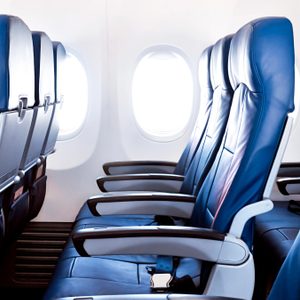

The post Here’s What Your Seat Choice Says About You, According to Flight Attendants appeared first on Reader's Digest.
from Reader's Digest https://ift.tt/ODqIESN
Comments
Post a Comment