We’ve all been there. A tiny ant crawling across the kitchen counter. A mini panic, followed by an attempt to remove it unharmed, which often ends with a frustrated squish. You think the problem has been solved, but then the masses descend.
No matter what state I’ve lived in, I’ve dealt with this particular problem. Ants in my kitchen in Virginia. Ants in my bathroom in Washington. What am I doing wrong? While they’re not as worrying as illness-carrying pests like mosquitoes and ticks, I still don’t want to share my home or my food with them.
Well, according to Laurel Hansen, PhD, a certified ant biology expert, I am indeed making one huge mistake that’s causing an entire ant army to invade my home on the regular—and you’re probably doing the same thing. Read on to find out the common misstep that makes your problem worse, what to do instead and how to prevent ants from getting in your house in the first place.
Get Reader’s Digest’s Read Up newsletter for more home, humor, cleaning, travel, tech and fun facts all week long.
What’s the common mistake you’re probably making with ants?

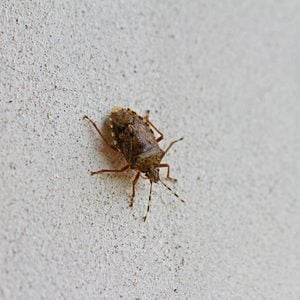
Squishing them!
And there’s a scientific reason for this: When you squish an ant, it releases pheromones that signal to members of its colony that they should retrieve its body or mount an attack on a threat. Hansen told us that ants “are very fastidious, so they keep their nest very clean and they keep their trails clean.” Because of this, they don’t let a dead member of the colony remain near one of their pheromone trails. When they get the distress signal via pheromones, worker ants quickly assemble and remove the body.
So what starts as a tangle with a single ant can often result in what looks like a swarm of ants, with many, many more gathering at the site of the squishing.
Just how bad can things get?
Really bad, really fast! Depending on the type of ant, they can perceive pheromone distress signals from up to several centimeters away. That may not seem like a lot, but it’s more than sufficient to cause big problems. If that army of ants shows up quickly, it means the colony’s location is likely nearby. As ants follow their previously laid-down pheromone trails, they may encounter the distress or death pheromone. When this happens, the workers start producing their own pheromones, which attract more ants down the pheromone line, and so it goes until you have an ant swarm.
According to researchers at Vanderbilt University, ants’ sense of smell is much more high-def than other insects‘, making them especially good at this. And although a distress pheromone can’t travel very far on its own, the wind can help it reach a colony at farther distances. Plus, as the ant starts to decompose, its body releases oleic acid, which is more potent and can last longer than the distress pheromones.
The number of ants that may arrive depends entirely on the species. Some species may send a couple of workers, while others—like fire ants—can swarm into the thousands. Which is … not good!
What should you do instead of squishing that ant?
If you see a single ant in your home and are inclined to save a life, it’s worth removing it from the home and setting it a safe distance away so it can’t immediately re-enter. However, if you see more than one ant in an area where either food or water is available, odds are that you need to take more aggressive preventative and reactive measures to deal with their numbers.
And if you do squash one or two, here’s your plan of attack.
Prepare for the masses with an insecticide
Ants are drawn to moisture, so an insecticide that uses a boric acid, sugar and water combination—like Terro—is a good choice if you’ve squashed an ant and are preparing for the colony to arrive. Terro doesn’t kill ants on contact. Instead, it works slowly. Worker ants consume it wherever you’ve laid it down and then take it back to the nest, where they share it with the queen and larvae. Because odorous house ants—like the tiny little “sugar ants” that invade so many kitchens and may emit a musty odor when squished—can have many colonies with multiple queens, eliminating multiple colonies at a time is the most effective strategy.
Before putting down any chemicals, especially ones with boric acid, make sure to read all label instructions. Also keep the bait traps out of reach of children and pets.

Terro
Block entry points
If it’s possible to see where ants are entering your home, do your best to stop them. Hansen suggests preventative measures such as trying “to plug up areas [and] remove vegetation from around the home.”
Wipe away as many trails as you can see
Here’s the tricky part: Humans can’t actually see ant pheromone trails, so it’s not possible to completely eliminate them on sight. But it doesn’t hurt, Hansen says, to wipe down any areas where you’ve seen ants with lemon juice or vinegar. This will throw ants off their own trails. Smart!
How else can you keep your home ant-free?
There are a few tactics, but the most important one is surprising because it has nothing to do with food. According to Hansen, “there should be no vegetation touching a structure, either on the roof or the sides or on the foundation, because those are all entry points.” So if your home has trees, shrubs, flowers or other types of vegetation that directly touch its walls, consider removing (or moving) those as a first step.
In addition, you should:
- Keep all surfaces clean and food-free.
- Plug any visible holes that could serve as entry points for ants. These include holes or openings along windows, doors and baseboards, as well as any points of entry along ceilings.
- Do your best to wipe down visible pheromone trails when you do encounter ants, cleansing surfaces with lemon juice and/or white vinegar.
- Eliminate obvious sources of moisture around your home. “Firewood laying on the ground is not a good idea, or planks laying on the ground,” Hansen says, “so clean up all that and any wood debris next to the structure.” That ounce of protection can save you a ton of grief from an army of ants!
RELATED:
- There’s a New Way to Ensure You Don’t Stay at a Hotel with Bedbugs—Here’s Where to Look Before You Book
- This Is Why You Rarely See Mosquitoes at Disney World
- Yup, You Really Should Be Cleaning Your Books—Here’s How to Do It Without Ruining Them
About the expert
|
Why trust us
At Reader’s Digest, we’re committed to producing high-quality content by writers with expertise and experience in their field in consultation with relevant, qualified experts. We rely on reputable primary sources, including government and professional organizations and academic institutions as well as our writers’ personal experiences where appropriate. We verify all facts and data, back them with credible sourcing and revisit them over time to ensure they remain accurate and up to date. Read more about our team, our contributors and our editorial policies.
Sources:
- Laurel Hansen, PhD, entomologist, ant biology specialist and professor at Spokane Falls Community College; phone interview, June 11, 2026
- Vanderbilt University: “Ants have an exceptionally high-def sense of smell”
- Aptive Pest Control: “Why You Shouldn’t Squish Ants”

The post Don’t Make This Common Mistake with Ants—Or You Could Have a Whole Ant Army Invading Your Home! appeared first on Reader's Digest.
from Reader's Digest https://ift.tt/YojO6UD
Comments
Post a Comment