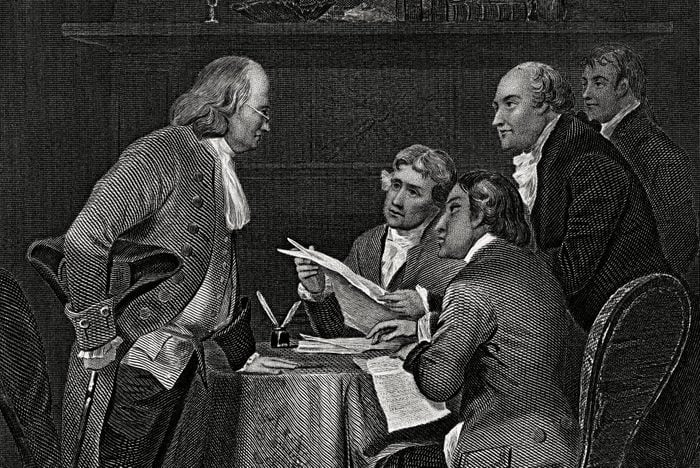
We declared our freedom from Britain on July 2
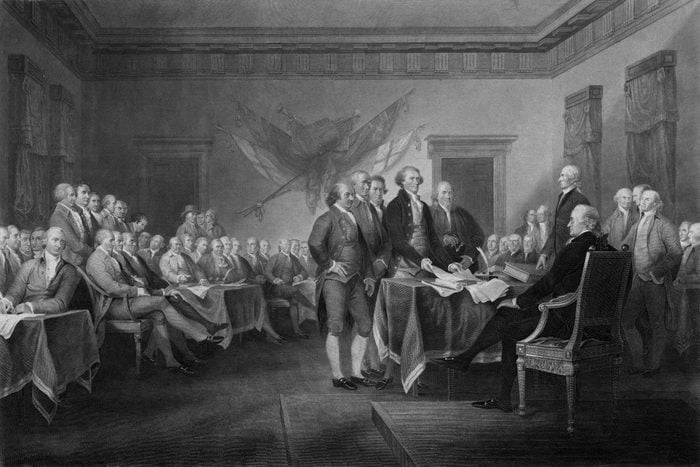
Say what? Then why don’t we celebrate Independence Day on July 2nd? Well, the 4th of July is when the Declaration of Independence was ratified by the Second Continental Congress in 1776, but the initial vote took place on July 2. (John Adams thought this date would be our national holiday, but it was not to be.)
This momentous event capped a busy year for our nation’s Founding Fathers. Early in 1776, Thomas Paine’s famous call to action, Common Sense, whipped up sentiment for independence that carried through the summer. On June 7, delegate Richard Henry Lee introduced an independence resolution, and Thomas Jefferson began writing the Declaration of Independence on June 11, 1776.
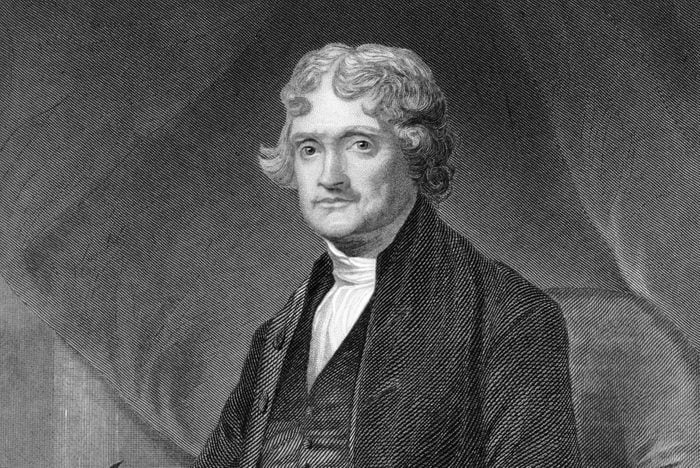
Thomas Jefferson wasn’t the first choice to write the Declaration
Thomas Jefferson is famous for his writing skills, producing hundreds of documents, letters and books that we still read today. But he wasn’t the first choice to write the Declaration of Independence. Of the Committee of Five (Jefferson, John Adams, Benjamin Franklin, New York’s Robert Livingston and Connecticut’s Roger Sherman), which was tasked with drafting the document, Benjamin Franklin was the best writer—but he turned it down.
In a letter to a friend, John Adams recalled a conversation he had with Jefferson in which they each proposed that the other write the Declaration. Known for being a curmudgeon, Adams said that he would do it but that it should be written by a Virginian, and besides, no one liked him (he said this, not us!). Clearly, Adams’s case was more compelling.
It took Jefferson 17 days to complete the document, and he later said Congress “mangled” some of his wording once they received it. He was also upset that they took out some of his more pointed references to Britain’s King George III, though as we’ll see coming up, plenty remained.

Only 26 copies of the original Declaration exist today
After Congress ratified the Declaration of Independence on July 4, 1776, it sent the document to a printer named John Dunlap to make approximately 200 copies. On July 5, these copies were distributed to various assemblies, conventions, committees and leaders of Continental battalions, but they were all unsigned. Only John Hancock, the president of the Congress, and Charles Thomson, the secretary, had their names printed on the bottom to prove authenticity.
Of these 200 copies, known as the Dunlap Broadsides, only 26 remain—though they occasionally pop up in odd places. In 1989, someone paid $4 for an old picture at a flea market only to find a copy of the Declaration hidden inside. In 2000, TV producer Norman Lear purchased this copy for $8.14 million!
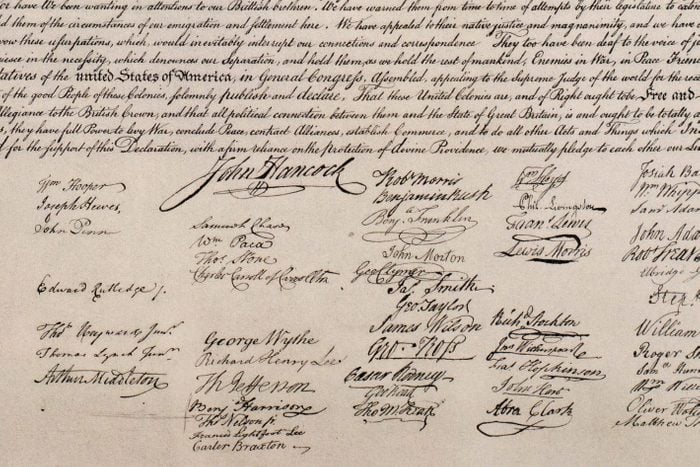
The Declaration’s signing didn’t take place until August 1776
Once the Dunlap Broadsides were distributed, Congress got down to the business of making the Declaration permanent. On July 19, they decreed that it be “fairly engrossed on parchment,” which meant written down and signed in a large, clear hand. A man named Timothy Matlack, who was an assistant to Secretary Thomson, is credited with writing the document.
On Aug. 2, 1776, most of the Continental Congress got together to sign the Declaration of Independence. John Hancock signed first, and his signature is the largest. The other delegates then signed, generally grouped by state from right to left and north to south. Delegates who were not present on Aug. 2 signed later, wherever they could fit their signature in.
And some did not sign at all: Robert Livingston was a New York delegate, fervent patriot and member of the Committee of Five. But he was in New York at the time, so he sent his cousin, Philip Livingston, to sign in his place.
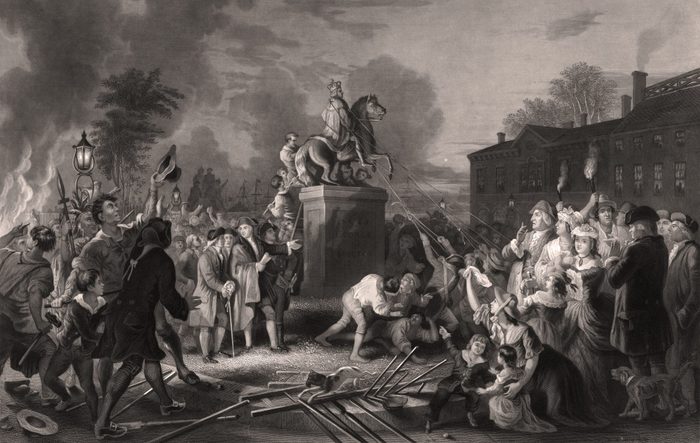
New York rioted when news of the Declaration spread
On July 9, 1776, George Washington read the Declaration of Independence to a jubilant crowd at City Hall Park in New York City. The call for freedom instantly fueled excitement among the revelers, and a riot broke out in the streets. The crowd charged down Broadway to Bowling Green Park and toppled a statue of King George III. Later, the statue was melted down and made into musket balls used by the American army in the Revolutionary War.

A woman printed a key version of the Declaration of Independence
John Dunlap’s broadsides aren’t the only existing printed copies of the Declaration of Independence. In 1777, a woman named Mary Katherine Goddard, who was Baltimore’s first postmaster general, printed the very first copies that included the signatures of the signers—55 of 56 of them, anyway. (Remember that the Dunlap copies had Hancock’s and Thomson’s printed names only.)
Between Dec. 20, 1776, and Feb. 22, 1777, the Continental Congress evacuated to Baltimore after British troops got too close to Philadelphia. Goddard was tasked with making copies of the document to distribute to the 13 states. This was a big risk, because it was the first time the signers became publicly known and because printing (and signing) such a document would have been an act of treason to the British crown.
Nine copies of the “Goddard Broadsides” exist today, and her name is listed on the bottom.
One Congressman recanted his support for the Declaration
Richard Stockton was a trailblazing patriot and the first member of the New Jersey Congressional delegation to sign the Declaration of Independence. A member of a prominent early-American family, Stockton served in various governmental roles and was sent by Congress to inspect northern Revolutionary War outposts like New York’s Fort Ticonderoga.
While returning to Philadelphia, Stockton was captured by the British. In prison, Stockton faced starvation, cold temperatures and harsh treatment, and after five weeks behind bars, Stockton accepted a pardon from a British general and was released to his family. The one condition of his freedom? He had to renounce his allegiance to the revolution and swear his loyalty to the king, which he did.
Upon his release from prison, Richard Stockton resigned from the Continental Congress and died at the age of 50 in 1781.
There really is a message written on the back
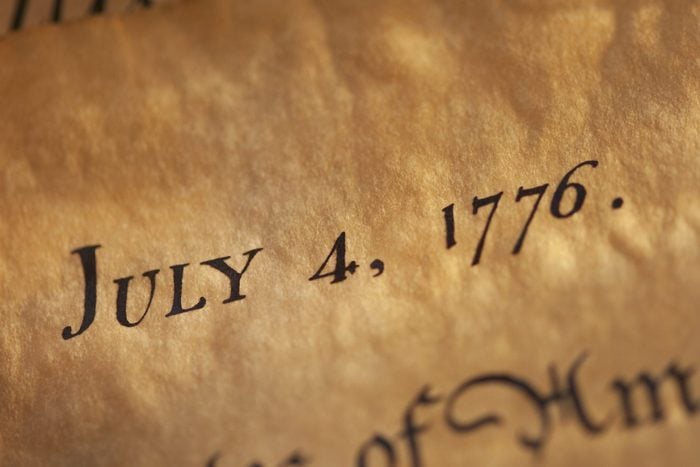
No, it’s not the secret map that Nicolas Cage hunted for in National Treasure. In reality, the words “Original Declaration of Independence dated July 4th 1776” is written on the back of the document at the bottom. If you can imagine someone rolling the Declaration from the top like a movie poster, the label is visible on the bottom back side when rolled in a tube shape.
The National Archives says that because the Declaration of Independence actually traveled with the Continental Congress during the Revolutionary War, and even after the war as the U.S. capital moved around, it’s thought that the label was added to easily identify the document when it was rolled up in storage.
Benjamin Franklin was the oldest person to sign the Declaration of Independence
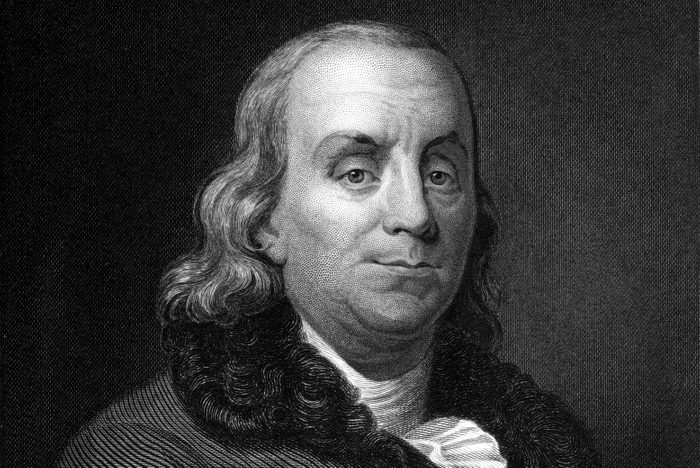
Benjamin Franklin was 70 years old when he signed the Declaration of Independence. For comparison, the youngest signer of the document, a South Carolina delegate named Edward Rutledge, was just 26 years old. For those of you who don’t enjoy mental math, Franklin was 44 years older than Rutledge. His many years of experience as a political leader are likely the reason Franklin was appointed to the Committee of Five to help draft the Declaration. Here’s another fun history fact: Franklin also signed the Constitution.
Providing your “John Hancock” comes from the Declaration of Independence
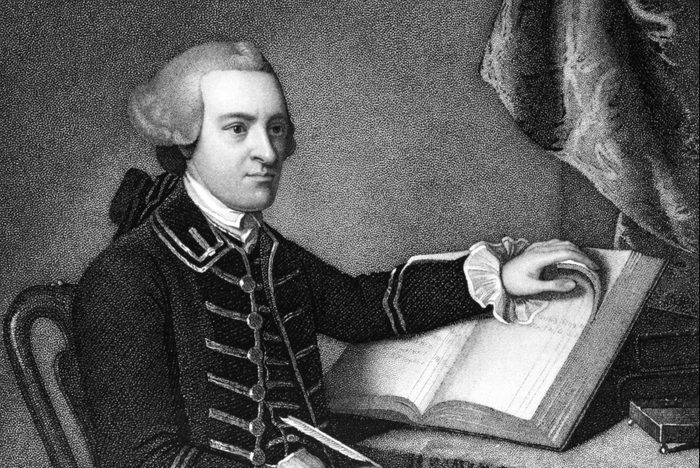
John Hancock was a jack of all trades, as far as early American history is concerned. He was the first and longest-serving president of the Continental Congress, the first signer of the Declaration of Independence and the first and third governor of the Commonwealth of Massachusetts.
And thanks to his stylish and very large signature, he’s also why we “give our John Hancock” when asked to sign our names. This colloquialism didn’t get started until at least the mid-1800s, but today, it is universally recognized whenever a signature is requested. Interestingly, the statesman’s signature as a youth did not yet have his recognizable stylistic flourishes.
We hid the Declaration of Independence during World War II
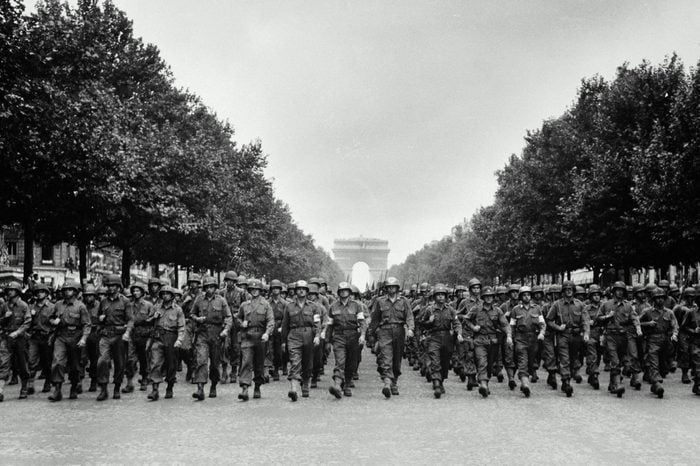
Although the Civil War was fought on American soil, it was during World War II that leaders of the United States were more fearful for the Declaration’s safety. Following the Pearl Harbor bombing in 1941, President Franklin D. Roosevelt recognized that Axis powers could potentially attack the U.S. capital, so he ordered important founding documents, including the Declaration of Independence and the U.S. Constitution, to be secretly relocated until the end of the war.
In December 1941, the documents, under heavy security, were transported to Fort Knox, where they remained until September 1944. Even though the war wasn’t formally over until 1945, the tide of the fighting had turned enough by late 1944 that the Declaration of Independence was returned to its permanent shrine in the Library of Congress.
The Declaration of Independence is a list of 27 individual grievances
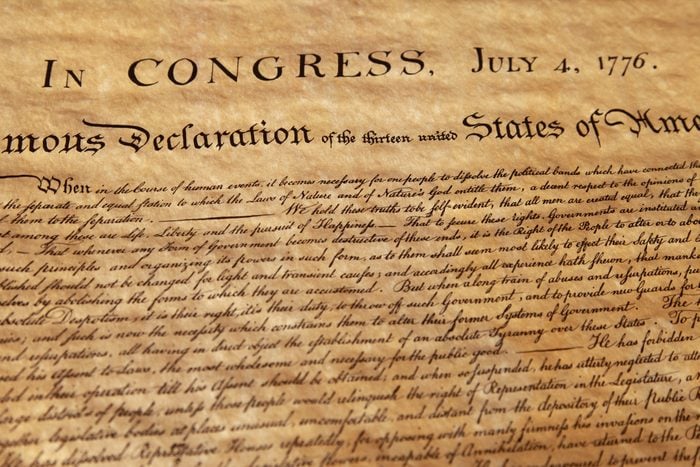
Americans have been learning about the Declaration of Independence for hundreds of years, and what most of us probably remember is the preamble: “We hold these truths to be self-evident, that all men are created equal, that they are endowed by their Creator with certain unalienable Rights, that among these are Life, Liberty and the pursuit of Happiness.”
But do you know what else is in there? A very long list of very specific grievances. You may have skipped over them because the document looks like one long run-on sentence, but Jefferson, Adams, Franklin and the rest of the signers endorsed a litany of complaints about King George. Many of the issues raised revolved around self-governance, but the founders got in some broadsides as well: “He has plundered our seas, ravaged our Coasts, burnt our towns, and destroyed the lives of our people.”
Sounds like a revolution was in order.
Additional reporting by Kelly Kuehn.
Why trust us
At Reader’s Digest, we’re committed to producing high-quality content by writers with expertise and experience in their field in consultation with relevant, qualified experts. We rely on reputable primary sources, including government and professional organizations and academic institutions as well as our writers’ personal experiences where appropriate. For this piece on facts about the Declaration of Independence, Carley Lerner tapped her experience as a journalist to ensure all facts are accurate. We verify all facts and data, back them with credible sourcing and revisit them over time to ensure they remain accurate and up to date. Read more about our team, our contributors and our editorial policies.
Sources:
- National Archives: “The Declaration of Independence: A History”
- Colonial Williamsburg: “Principles of Freedom”
- New Yorker: “Was the Declaration of Independence Better Before the Edits?”
- New York Times: “The Boston Tea Party Was More Than That. It Was a Riot.”
- History: “After Pearl Harbor: The Secret Plan to Hide America’s Iconic Documents”
- National Archives: “Travels of the Charters of Freedom”
- Politico: “The Secret Plan to Protect America’s Founding Documents During WWII”
- Constitutional Walking Tour: “Richard Stockton—One of America’s Founding Fathers”
- National Constitution Center: “10 fascinating facts about the Declaration of Independence”
- Time: “Remembering the Woman Who ‘Signed’ the Declaration of Independence”
- Stanford University: “Signed by John Hancock”
- The Franklin Institute: “Benjamin Franklin and the Declaration of Independence”
The post 12 Interesting Facts About the Declaration of Independence That You Never Knew appeared first on Reader's Digest.
from Reader's Digest https://ift.tt/l8is0Ha
Comments
Post a Comment