If you’ve ever stood in the supermarket’s dairy aisle comparing egg cartons, you’ve probably noticed something: Nearly every package is labeled Grade A or Grade AA. That raises an obvious question: Are eggs like batteries, sold in ever-increasing letter categories? And what’s the difference between them all?
Well, you’ll never come across a Grade C or D egg. But Grade B eggs? Those are very real and still produced today under the same federal grading system. Yet most shoppers will go their entire lives without ever spotting a carton in the egg case.
So where are these B players hiding—and should you care? Turns out, those are egg-cellent questions. For the answers, I spoke to food science consultant Ed McCormick. Let’s get crackin’.
Get Reader’s Digest’s Read Up newsletter for more food news, humor, travel, tech and fun facts all week long.
What is egg grading?
Egg grading is a system used to evaluate egg quality based on appearance and physical characteristics.
Inspectors from the U.S. Department of Agriculture (USDA) assess both the outside and inside of the egg, including:
- Shell cleanliness and shape
- The size of the air cell inside the egg
- The firmness of the egg white (albumen)
- The appearance and position of the yolk
To examine the interior without breaking the egg, graders use a process called candling, which involves shining a bright light through the shell to reveal internal details.
According to the USDA, these factors determine the egg’s grade, which reflects quality and appearance—not nutritional value or safety.
What are the different egg grades?
In the U.S., eggs are divided into three main consumer grades. While most shoppers only ever encounter one or two of them, all are defined by the USDA:
- Grade AA: These are the highest-quality eggs. The whites are thick and firm, the yolks are high and round, and the shells are clean and unbroken.
- Grade A: The eggs are very similar to AA, but the whites are slightly less firm. These are the most commonly sold eggs in grocery stores.
- Grade B: These are lower in visual quality and appearance. The whites are thinner, the yolks are flatter and the shells may be stained or irregular (though not cracked).
McCormick puts it more vividly: “Grade AA eggs are firm and rounded with thick, tightly held whites that stand firm. Grade A eggs are a bit less firm. The whites spread a little more, but the yolk is still quite high. Grade B eggs reveal considerable thinning to the white, wider spread, while the yolk becomes flatter and more fragile.”
Importantly, Grade B eggs are still edible and wholesome; they just don’t win any beauty contests.
Why have you never seen Grade B eggs in a grocery store?

The short answer: They’re not typically sold in cartons like other eggs. Instead, Grade B eggs are diverted away from retail shelves and used in processed egg products. And a big reason is their looks.
“Grade B eggs don’t look fancy when they are cracked,” McCormick explains. “They simply spread, and the yolk doesn’t really have that old-school dome shape people expect.”
That matters more than you might think. “The retail business is primarily driven by visual expectations,” he adds, noting that even perfectly edible eggs won’t make the cut if they don’t look “fresh” to shoppers.
There’s also a practical angle: structure. Grade B eggs are, well, a bit floppy. “Thin egg whites and weaker yolk membranes equate to less structure,” McCormick says.
So if you’re frying or poaching (where you want a neat, Instagram-ready dish), Grade B eggs won’t hold their shape. But in other uses, that weakness is basically irrelevant.
Are Grade B eggs safe to eat?
Yes, Grade B eggs are safe to eat. Both the USDA and the U.S. Food and Drug Administration (FDA) emphasize that egg grading is about quality, not safety. All eggs sold in the U.S. must meet strict safety standards regardless of grade.
“The grading system takes consideration of quality factors, such as texture and appearance, not factors of nutrient content or inherent safety,” says McCormick. The FDA also notes that proper handling—such as refrigeration and cooking to safe temperatures—is what determines egg safety.
That means:
- Grade B eggs are not more likely to make you sick than Grade A or AA eggs.
- They have similar protein and nutrient content.
- The differences are mostly cosmetic and structural.
In other words, Grade B eggs may be the “ugly ducklings” of the egg world, but they’re still perfectly usable.
So where can you find Grade B eggs?
Even if you’ve never seen them in a carton, you’ve almost certainly eaten them. Grade B eggs are primarily used to make processed egg products, such as:
- Liquid eggs (cartons of pre-cracked eggs)
- Frozen egg products
- Dried or powdered eggs
These products show up in:
- Baked goods
- Packaged foods
- Restaurant and food-service operations
Why? Because once the eggs are cracked, mixed or dried, looks aren’t important. “Processing removes the importance of structure,” McCormick explains. “When eggs are blended, pasteurized or dried, the differences in yolk height or white thickness no longer matter. Hence, Grade B eggs represent an easier and economical option.”
Turns out, not all eggs need to look egg-straordinary to be useful.
Why do cartons of Grade B eggs occasionally show up on shelves?
In rare cases, Grade B eggs may make a brief appearance in stores, usually during supply disruptions.
For example, during outbreaks of avian influenza (bird flu), which reduced egg supplies in the U.S., lower-grade eggs were sometimes redirected to grocery stores to help meet demand. The USDA has documented how such outbreaks can significantly impact egg availability and pricing. Still, these situations are the exception, not the rule.
What’s the bottom line here?
Grade B eggs aren’t rare—they’re just hidden in plain sight. They don’t show up in cartons because they don’t meet the visual standards shoppers expect. But they’re still safe, nutritious and widely used in the foods you eat every day. I bet that’s not eggs-actly what you expected.
RELATED:
About the expert
|
Why trust us
At Reader’s Digest, we’re committed to producing high-quality content by writers with expertise and experience in their field in consultation with relevant, qualified experts. We rely on reputable primary sources, including government and professional organizations and academic institutions as well as our writers’ personal experiences where appropriate. We verify all facts and data, back them with credible sourcing and revisit them over time to ensure they remain accurate and up to date. Read more about our team, our contributors and our editorial policies.
Sources:
- Edmund “Ed” McCormick, food science consultant, founder of Cape Crystal Brands and author of The Food Questions America Is Asking; email interview, April 6, 2026
- USDA: “Egg Grading Manual”
- USDA: “United States Standards, Grades, and Weight Classes for Shell Eggs”
- FDA: “Egg Guidance, Regulation, and Other Information”


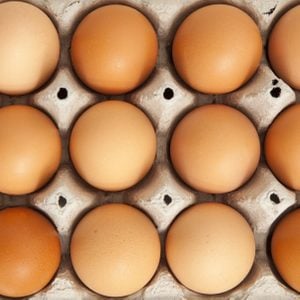
The post Yes, Grade B Eggs Exist, but Here’s Why You Won’t See Cartons of Them in Grocery Stores appeared first on Reader's Digest.
from Reader's Digest https://ift.tt/dDsZQXt
Comments
Post a Comment