Whenever anyone in my family buys something new to wear, I nudge them to throw it right in the wash. My sons—and husband, honestly—roll their eyes at me. Am I being extra? Maybe? I report on places germs hide a lot, so I might be a bit microbe-obsessed.
But I know I’m not the only one confused on this issue. You may have wondered: Do I rip off the tags and rock this amazing shirt right now … or is that gross? On the one hand, you’re not considering wearing underwear out of the package. (Um, you aren’t, right?) On the other hand, it probably came from a random store or Amazon warehouse, so maybe you should suds it up before letting it get close and personal with your skin.
It’s time we got a definitive answer to this debate. To find out if prewashing new clothes is crucial or just a waste of water, I consulted two experts: a Cornell assistant professor of textiles and a microbiologist known professionally as “The Germ Guy.” Read on to find out whether you should wash new clothes before wearing … or if you can slip them on without a worry.
Get Reader’s Digest’s Read Up newsletter for more cleaning, fun facts, humor, travel and tech all week long.
Do you really need to wash clothes before wearing them?

Yes, you should wash clothes before wearing them. Even if your new top or pair of leggings is fresh out of the package, it could be contaminated with germs, toxic chemicals, dirt and more. Processing textiles is a multistep process that frequently takes place in several countries, says Larissa Shepherd, PhD, an assistant professor in the Department of Fiber Science & Apparel Design at the Cornell College of Human Ecology in Ithaca, New York. “These textiles have been touched by many hands, gone through storage and transportation, and may have residual chemicals and dyes left on them from processing,” she explains.
And that’s just the chemical load. New clothing is often filthy, says Toronto-based microbiologist Jason Tetro, better known as The Germ Guy. “Clothes tend to travel through a number of different environments, where they may end up being contaminated with a variety of bacteria and viruses.”
What type of toxins might be on new clothes?
New clothes may be coated with many chemicals, including excess dyes and formaldehyde (used to prevent wrinkling). “It’s hard to tell what’s on there because of our global supply chain,” says Shepherd. In the U.S., if you look at your garment tag, the Federal Trade Commission requires that brands list the country of origin, manufacturer information and fiber content, she explains. But the “country of origin” just refers to where an item was processed or manufactured—as in, assembled. It doesn’t tell you “all of the places along the way of becoming a garment or of finishing processes and the chemicals used,” she says. “Providing all that information would be difficult from fiber to finished garment because it is a global supply chain.”
You may think you’re safer going with higher-end garb, and there is some truth to that. But make no mistake: Splurging is no guarantee you’ll get a pure, pristine piece. “Oftentimes the higher-priced or designer items meet a greater standard for the consumer (e.g., strength, luster, etc.), but the machinery, oils, finishing and need for storage is still there,” Shepherd says. The bottom line? “The process itself of making a textile is often ‘dirty,’ which is why it is ideal to wash your clothes before use—especially if you have sensitive skin—whether it is a lower-priced item or high-priced item.”
Are organic items free of these toxins?
Not necessarily. Buying organic does not ensure freedom from chemicals. A 2022 study conducted in Spain comparing organic cotton and nonorganic cotton baby and maternity clothes found formaldehyde in both groups. The washed versions of these items did not contain the chemical, so the takeaway is clear: Launder your brand-new clothes, even if they’re organic or from a top-tier label.
What type of germs can accumulate on clothes?

The most common bacteria on new textiles is Staphylococcus, which is often found on the skin, and E. coli, found on hands that haven’t been washed thoroughly, Tetro says. You may also run into norovirus, from people who are sick with this stomach bug, he adds.
So how do these bad-news bugs get on your new clothes? They hitch a ride from contact with dirty hands and surfaces along the way. “In order to make clothes, they need to be touched and come into contact with humans,” Tetro says. That’s just one reason why wearing before washing is a major laundry mistake to avoid.
Why is this such a big problem?
Germs on new clothes can cause health problems. If there’s staph on a surface that touches your skin, you can get a stubborn skin infection. This is particularly a concern for children, older adults and anyone with a compromised immune system.
You can also catch a virus from whoever tried that item on before you—or any of the workers who handled it in the store. “If they are infectious, they will transfer whatever they have to the clothes,” Tetro says. “Colds, flu, COVID and any other respiratory pathogen can find its way into the fabric and lead to a possible transfer to you.”
The manufacturing chemicals also pose a health risk. Formaldehyde can irritate our skin, eyes and nasal passages. What’s more, it’s a known carcinogen, according to the U.S. Environmental Protection Agency. Simply washing your clothes can remove this toxic chemical.
If you don’t wear a new item for a while, can you just skip washing it?
Sorry, but no. There’s no safe waiting period to put new clothes aside and skip washing them. Harsh chemicals stick around long-term (VOCs are called forever chemicals for a reason). Still, stashing the new threads in your closet to wear later may accomplish something on the germ front since viruses last only a matter of weeks on surfaces, Tetro says. Bacteria, on the other hand, can survive for months.
What’s the best way to wash new items?
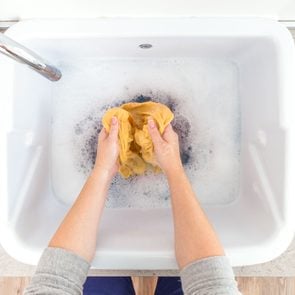
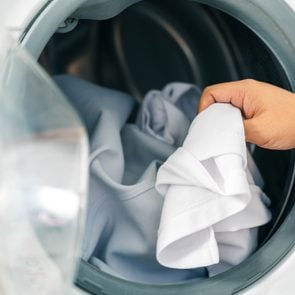
Wash your new clothes according to the label’s instructions. Ideally, use a gentle laundry detergent, plus “an antimicrobial agent—an enzyme or a disinfectant,” advises Tetro. You should also sort by color since there’s a chance excess dyes may run in the wash. If you notice a new item of clothing bleeding in the wash, consider giving it a second wash before wearing to protect your skin and other garments from run-off dye.
Oh, and don’t skip the dryer if your new clothes can handle it: Dryers have superpowers, and a big one is killing germs.
What if your clothing purchase smells extra funky? Is that a red flag?
If the item lands on your doorstep smelling smoky or musty, that’s a sign it passed through subpar conditions. Throw that bad boy in the washing machine.
Now, if your new buy has a strong chemical odor, “and the item wasn’t in a plastic bag, I might be concerned and opt to return it,” Shepherd says. “There are some fast-fashion brands I would definitely steer clear of. Some have been accused of having high levels of toxic substances in their clothing.”
She prefers not to name the rumored offenders, but plenty of other sources have pointed fingers at fast-fashion brand Shein. Greenpeace Germany even wrote a report about the dangerous chemicals in the clothing. And both the European Union and South Korea have flagged Shein, Temu and AliExpress for failing to meet safety standards. In other words: Buyer beware.
RELATED:
- Here’s How Often You Really Need to Wash Your Winter Coat
- This Bedroom Item Is Surprisingly Dirty—Here Are the Gross Things That Happen If You Don’t Clean It
- This Is the Dirtiest Part of a Cruise Ship, According to the CDC
About the experts
|
Why trust us
At Reader’s Digest, we’re committed to producing high-quality content by writers with expertise and experience in their field in consultation with relevant, qualified experts. We rely on reputable primary sources, including government and professional organizations and academic institutions as well as our writers’ personal experiences where appropriate. We verify all facts and data, back them with credible sourcing and revisit them over time to ensure they remain accurate and up to date. Read more about our team, our contributors and our editorial policies.
Sources:
- Jason Tetro, microbiologist, author of The Germ Code and The Germ Files, and host of the Super Awesome Science Show podcast; email interview, Jan. 14, 2026
- Larissa Shepherd, PhD, assistant professor in the Department of Fiber Science & Apparel Design at the Cornell College of Human Ecology; email interview, Jan. 14, 2026
- Toxics: “Early-Life Exposure to Formaldehyde through Clothing”
- U.S. Environmental Protection Agency: “Facts About Formaldehyde”
- Greenpeace: “Taking the shine off SHEIN: Hazardous chemicals in SHEIN products break EU regulations, new report finds”
- Le Monde: “Shein and Temu products found to contain high levels of toxic chemicals”

The post Debate Settled! Here’s Whether You Really Need to Wash New Clothes Before Wearing Them appeared first on Reader's Digest.
from Reader's Digest https://ift.tt/7XHTWiz
Comments
Post a Comment